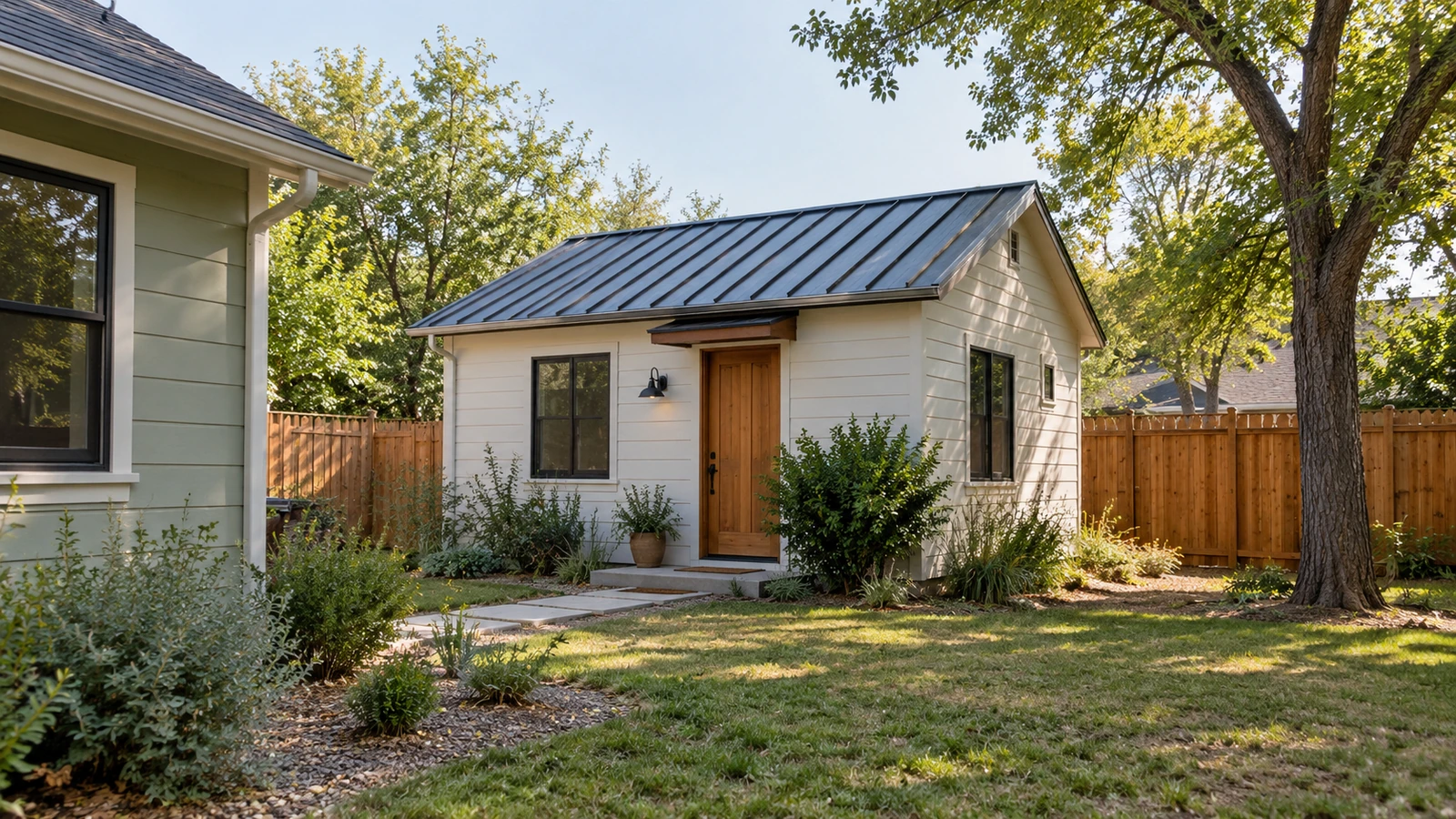
Can you build an ADU in Austin? It may be possible, but confirm the rules for the specific property before making it part of your buying budget. Zoning, lot size, recorded restrictions, trees, drainage, utilities and the proposed design all belong in that review. Austin’s HOME amendments create options for additional homes on qualifying lots; they do not guarantee that a particular backyard can accommodate your plan. [1][2]
A big backyard can get your imagination going pretty quickly. A place for family to stay. A separate home office. Maybe a rental that helps with the monthly payment.
Those are different goals, and they can lead to different property searches. Before paying extra for a home advertised as having “ADU potential,” find out what that potential actually means.
I’m Leila Showery, an Austin REALTOR® with Compass. Here is how I would organize that conversation before you buy a home with an existing guesthouse or plans for a future backyard unit.
What counts as an ADU in Austin?
People use ADU, guesthouse, casita and backyard cottage somewhat interchangeably in listings. The City’s definition depends on the space itself: a dwelling unit includes habitable space, a full bathroom and permanent cooking facilities. A structure meeting that definition must satisfy the requirements for a dwelling unit. [2]
When touring, ask what the building is approved for. A finished room behind the house and a separate dwelling are different things to investigate. A listing description cannot settle the permitted use.
What did Austin’s HOME amendments change?
HOME Phase 1 allows up to three housing units on qualifying properties zoned SF-1, SF-2 or SF-3, subject to applicable development requirements. It also changes the old primary-versus-accessory distinction for the residential uses covered by that phase. [1]
HOME Phase 2 addresses a different situation: one home on a qualifying small lot. Its small lot single-family use is for one dwelling, so a smaller lot does not automatically come with permission for an additional backyard home. [1]
Start with the address and the proposal. “Austin allows more housing” is useful context; it is not the answer to what you can build on the home you are considering.
Seven checks before buying for ADU potential
| Check | What to request or confirm |
|---|---|
| 1. Zoning and jurisdiction | Confirm who regulates the property, its zoning and the residential use proposed. |
| 2. Survey and restrictions | Review the lot, easements, recorded covenants and any HOA documents. |
| 3. Usable building area | Have the project team assess trees, setbacks, cover limits, drainage and the existing structures. |
| 4. Utilities and access | Ask how water, wastewater, electrical service and construction access would work. |
| 5. Complete budget | Request a site-specific scope that includes work beyond the building itself. |
| 6. Existing records | For a guesthouse already there, collect plans, permits, inspection results and occupancy records. |
| 7. Ownership and intended use | Clarify what you would own and whether your planned occupancy or rental use is allowed. |
The City’s homeowner permitting resources point buyers and owners toward zoning, development standards, restrictions and permit history. Use those records to start the conversation, then bring the address and your concept to the appropriate City staff and project professionals. [3]
Why a large lot can still have limits
City approval and private restrictions are separate checks. Austin explains that zoning changes do not override enforceable deed restrictions, and a City permit may be approved even when a project conflicts with a private restriction. Have the title company provide the recorded documents and get legal guidance on anything that could affect your proposed use. [4]
The physical site matters, too. Austin’s residential review process addresses items such as zoning overlays, regulated trees and utility requirements. Ask your designer or builder to evaluate the actual building area before treating an open patch of lawn as a future home site. [5]
Check drainage easements and the City’s development floodplain information. The City generally prohibits permanent structures in drainage easements, although the specific easement terms matter. Its floodplain development rules also deserve their own review. A lender’s flood-insurance determination does not answer every question about where you can build. [6]
Whether you are searching in Bouldin Creek, Zilker, North Loop or East Austin, the neighborhood name cannot establish those answers. Compare the individual sites.
Buying a home that already has a guesthouse?
Ask for the approved use and the records behind it. Austin’s AB+C Public Search is a starting point for permit history. Approved plans may also be available through the portal; City staff can help when records are missing or unavailable online. [3][7]
Compare the records with what is actually built. Ask about additions, kitchen installations, garage conversions and later changes. A permit number by itself does not explain whether the entire space you toured was included in the approved work.
Request the applicable Certificate of Occupancy. Austin describes a CO as confirmation that a structure is habitable for its legal use and property type, and issues new COs after successful final inspections for new construction or significant renovations. [8]
Have your inspector evaluate the unit along with the main home. If a record cannot be located, get that question resolved with the City rather than guessing what its absence means.
What should your ADU budget include?
Ask for more than a price per square foot. A useful estimate should identify design and engineering, surveys, permitting, site preparation, foundation work, utility connections, the building, finishes and restoration of the yard. Ask what is excluded, who is responsible for each item and how changes would be handled.
Get the lender’s answers early: how would you finance construction, what funds must remain available and how would the lender treat any proposed rental income? Ask your insurance agent about the intended use and coverage during construction and after completion. Those answers belong beside the contractor’s estimate.
For a rental plan, work through vacancy, maintenance, management, utilities and reserves before deciding how much income to rely on. Buying the property and funding a future project are two connected budgets.
If you are thinking about Airbnb or another short-term rental, confirm that use separately. Austin’s STR program says operating licenses are non-transferable, so do not assume a seller’s license will cover you after closing. Ask the City to confirm the current requirements for that unit and jurisdiction, and review private restrictions before relying on short-term rental income. [9]
What should you settle before making an offer?
Tell your agent whether the additional unit is essential or simply something you would like later. That distinction affects which homes make the shortlist and which questions need answers first.
Also clarify what you are buying: the entire parcel or a condominium interest with particular rights to the yard and improvements. Have the title company and appropriate advisers explain those documents before assuming you control all the land shown in the photos.
Build time for the necessary reviews into your buying plan. If the ADU is the reason the numbers work, unresolved feasibility should carry real weight in your decision.
Considering a South Austin home? Start with my Bouldin Creek homebuying guide or Zilker buyer checklist. For the financial side, review how much cash to plan for when buying in Austin.
Austin ADU questions buyers ask
Can I build an ADU on any lot in Austin?
No. The answer depends on the property’s zoning, lot characteristics, applicable development standards and private restrictions. Confirm the proposed use with the City and have the site evaluated before assuming an additional home is feasible.
Does Austin allow three homes on one lot?
HOME Phase 1 allows up to three housing units on qualifying SF-1, SF-2 and SF-3 properties, subject to applicable requirements. That allowance does not guarantee that three units will fit or be approved on a specific property.
Can a deed restriction stop an ADU even if zoning allows it?
An enforceable private restriction may affect the project even when it meets City zoning. Review the recorded restrictions and obtain legal guidance on their application; a City permit does not resolve that private question.
How do I check whether an existing Austin guesthouse was permitted?
Start with AB+C Public Search, request approved plans and inspection records, and ask for the applicable Certificate of Occupancy. Have City staff clarify missing records and compare the approved work with the actual building.
Can I use an Austin ADU as an Airbnb?
Possibly, but confirm the unit’s eligibility and current short-term rental licensing requirements with the City, and review private restrictions. Austin’s STR operating licenses do not transfer, so a seller’s license does not establish your ability to operate after closing.
How much does it cost to build an ADU in Austin?
A useful budget requires a site-specific design and scope. Request estimates covering the building, site work, utilities, professional services and permitting, then review financing, insurance and reserves before deciding what you can spend.
Find a property that fits the plan
A backyard home can be a meaningful part of your search. Start with what you want it to do, then investigate whether the property supports that goal.
I’m Leila Showery, an Austin REALTOR® with Compass. Send me your budget, preferred areas and whether you want an existing unit or space to explore building one. We can organize the home search around those priorities and identify the questions to take to the City, title company and project team. Let’s talk about your Austin home search.
Sources and local research tools
City guidance checked October 23, 2026. Requirements and property conditions can change; confirm the rules for the specific address and proposal.
- City of Austin: HOME amendments
- City of Austin: Additional Dwelling Units
- City of Austin: Homeowner Permitting Resources
- City of Austin: Deed Restrictions and Development
- City of Austin: Residential Plan Review
- City of Austin: Floodplain Management
- City of Austin: Building Inspections and approved plan records
- City of Austin: Certificate of Occupancy
- City of Austin: Short-Term Rentals